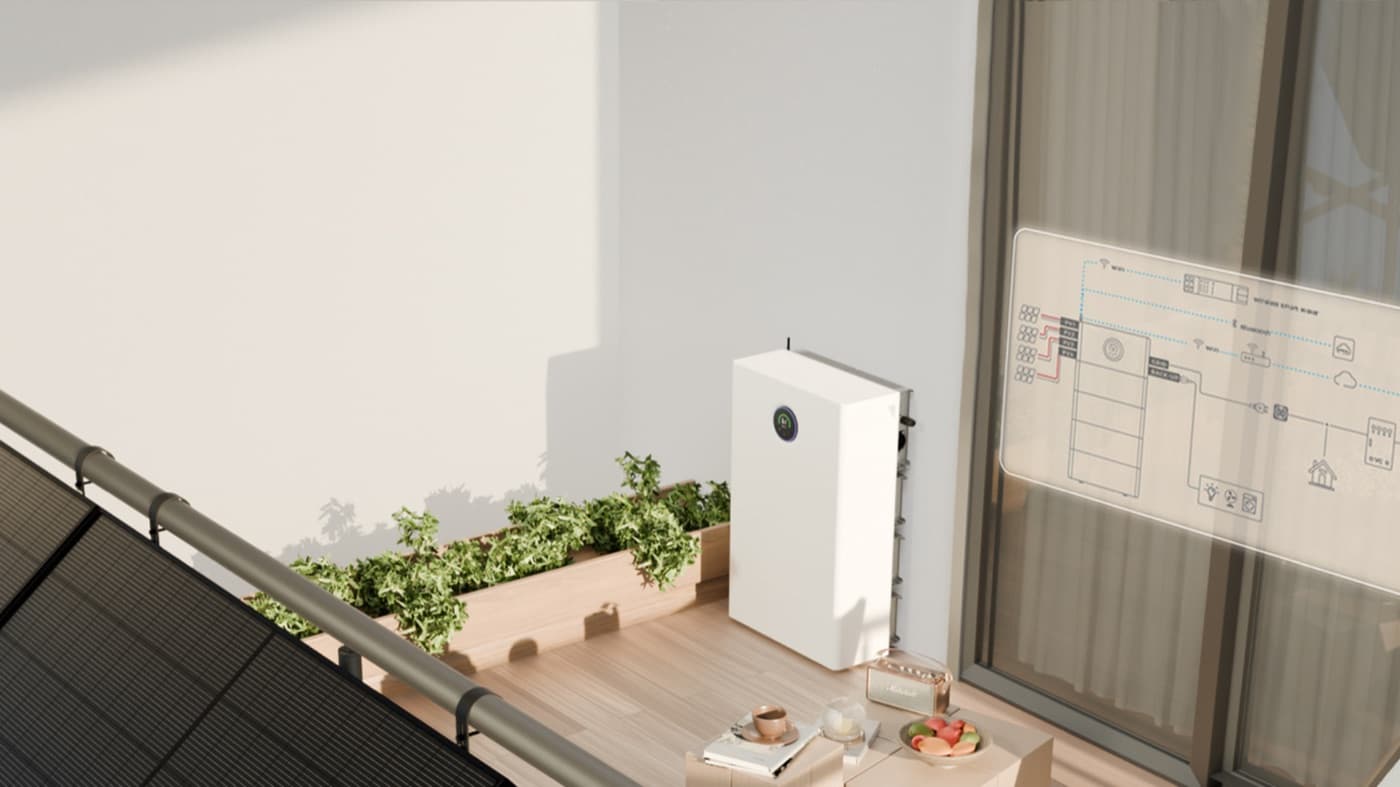
The WA Residential Battery Scheme has operated since 1 July 2025. It pairs state rebates and optional no-interest loans with conditions on the product, the vendor, the installer and virtual power plant participation, and each of those is a requirement rather than a preference.
This guide organises the published requirements for retailers and installers. It does not replace the current scheme rules, electricity retailer requirements, network documentation or site-specific electrical assessment.
Rebates cover usable capacity to 10 kWh, priced by network area
Eligible batteries must be new, additional or replacement systems with at least 5.0 kWh of usable capacity, and both the battery and the inverter must appear on the relevant approved and supported product lists. The rebate itself is calculated on usable capacity up to 10 kWh:
| Customer area | Rebate rate | Maximum rebate |
|---|---|---|
| Synergy | $130 per kWh | $1,300 |
| Horizon Power | $380 per kWh | $3,800 |
Virtual power plant participation is a condition of eligibility, not an add-on. Applicants must join an eligible virtual power plant product, and the property must maintain the internet connection required for battery testing and participation.
No-interest loans run from $2,001 to $10,000 over terms of three to ten years, with a current household gross annual income threshold of less than $210,000. Loan approval and rebate eligibility are separate decisions.
Accreditation alone does not make a retailer a participant
Scheme participation is not established by electrical accreditation alone. A retailer must:
- maintain a physical business presence in Western Australia
- become an approved vendor through the scheme administrator, Plenti
- satisfy the scheme's due diligence, insurance and operational checks
- use installers who meet the installer criteria
- register with Synergy where operating in the Synergy service area
- supply equipment that appears on the lists applying to the property
NETCC Approved Seller status became a vendor accreditation requirement on 1 October 2025. The NETCC credential record for PSW Energy and Perth Solar Warehouse identifies the current certificates held by each business.
Installers need SAA battery accreditation and a WA business address
Two requirements sit at the base: a Western Australian business address, and Grid Connected Battery System accreditation through Solar Accreditation Australia. Electrical work must still be completed within the scope of current WA electrical licences and contractor arrangements.
Before installation, the responsible parties should confirm:
- the battery and inverter appear on the applicable approved and supported lists
- the proposed configuration meets Western Power or Horizon Power requirements
- the retailer functionality and installation requirements are satisfied
- the system can participate in the required virtual power plant product
- any gateway used with an AC-coupled retrofit is supported
- commissioning, electrical certification and evidence obligations are planned
The scheme can support a battery added to an existing solar system. It does not follow that every retrofit configuration is eligible. Existing inverter architecture, gateway requirements, supported product combinations and network settings still need assessment.
The federal program can apply to the same installation, under its own rules
The federal Cheaper Home Batteries Program and the WA scheme are separate eligibility frameworks. Both can apply to one installation.
Under current federal rules, an eligible battery has nominal capacity from 5 kWh to 100 kWh. Small-scale technology certificates apply to the first 50 kWh of usable capacity, with the certificate factor and capacity tier determined by the installation date.
From 1 May 2026, federal support is applied at:
- 100 per cent of the applicable factor for usable capacity up to and including 14 kWh
- 60 per cent for usable capacity above 14 kWh and up to 28 kWh
- 15 per cent for usable capacity above 28 kWh and up to 50 kWh
The Cheaper Home Batteries Program update explains the installation-date rule and capacity tiers in more detail.
Connection requirements in the SWIS changed from 1 May 2026
For standard small-use connections in the South West Interconnected System, requirements introduced on 1 May 2026 allow up to 30 kVA of aggregate inverter capacity. New and upgraded systems must support remote disconnection and reconnection by the electricity retailer or be export-limited to 1.5 kW.
The general WA requirements do not mandate a single communications protocol. Synergy's implementation uses its own Distributed Energy Resources Functionality Requirements and installation process. The WA solar and battery requirements guide separates the statewide rule from retailer-specific implementation.
Evidence obligations tightened from 1 March 2026
From 1 March 2026, eligible battery installations require clear, geotagged and time-stamped photographs of critical labelling. Serial numbers, attendance evidence, commissioning records and electrical certificates must agree with the claim record. The battery photo evidence guide provides a practical checklist.
Retailers and installers remain subject to Australian Consumer Law. Advertising, quotes and contracts should distinguish:
- the WA Government rebate
- any Plenti no-interest loan
- the federal certificate discount
- the customer's total payable price
- virtual power plant participation conditions
Approval should not be represented as certain before the relevant application and eligibility checks are complete.
Primary references
- WA Residential Battery Scheme eligibility requirements (opens in a new tab)
- WA Residential Battery Scheme information for industry (opens in a new tab)
- WA Residential Battery Scheme information for applicants (opens in a new tab)
- Clean Energy Regulator solar battery guidance (opens in a new tab)
- WA solar and battery compliance centre
- Adding a battery to existing solar in WA
Scheme terms, supported equipment lists and certificate values can change. Current official publications should be checked before a quote is issued or work begins.